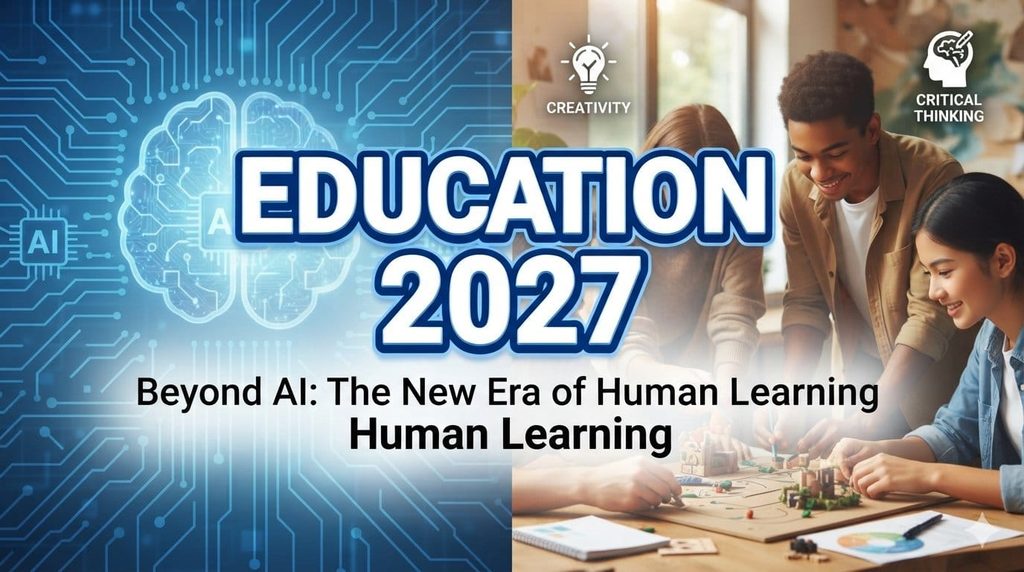
The Future of Learning: Top Trending Opportunities in Education for 2027
The educational landscape is undergoing a massive structural shift. By 2027, the conversation has moved past simply reacting to emerging technologies. Instead, the focus is on intentional integration, human-centric design and redefining what it means to be “future-ready”.
| For educational institutions, edtech innovators and investors, this evolution is creating massive new spaces for growth. Here are the top trending opportunities shaping education in 2027. |
1. From “Add-On” AI to Core Infrastructural Engines
In the past, artificial intelligence in schools was limited to standalone chatbots, basic essay graders, or individual study apps. Today, the opportunity lies in Deeply Integrated AI Infrastructure.
Schools are looking for comprehensive enterprise platforms where AI acts as a fundamental engine. The biggest growth areas include.
- Predictive Analytics: Software that tracks student engagement and behavioral metrics to flag at-risk students before that fall behind.
- Automated Administrative Workflows: Tools that handle backend teacher logistics-like scheduling, grading compliance, and lesson planning templates – allowing educators to spend more face-to-face time with students.
2. The Reimagining of Assessment and Portfolios
Generative AI has permanently disrupted traditional homework assignments and multiple choice testing. Because AI can easily pass standard knowledge-retrieval exams, educational systems are aggressively moving toward authentic assessment.
This opens up a massive market for new verification and evaluation tools:
- Continuous Portfolio Platforms: System that allow students to curate real-world projects, multimedia presentations and reflective journals over time.
- Oral and Interactive Exam Software: Tools that help teachers evaluate a student’s live critical thinking process and verbal reasoning rather than just the final written output.
3. Intentional and Neurodiverse Classroom Design
The post-pandemic trend of hyper-sterile, quiet, or minimalist classrooms is giving way to dynamic, human-centric spatial design. Schools are actively investing in environments that support cognitive regulation, focus and a sense of belonging.
Key opportunities in physical and digital school environments include:
- Flexible and Ergonomic Furnishings: Spaces designed for rapid transition between independent focus work, collaborative group projects and physical movement.
- Biophilic and Sensory-Aware Design: Integration of natural lighting, acoustic-dampening materials and sensory zones tailored to support neurodivergent learners.
4. Curriculum Overhauls Focused on “Human Skills”
As technical skills change at a blistering pace, the long-term value of education lies in cultivating uniquely human capabilities. Curricula in 2027 are prioritizing durable, foundational skills over rote memorization.
High-demand curricular areas include:
- Information and Media Literacy: Specialized modules teaching students how to identify deepfakes, navigate algorithmic bias and cross-reference AI – generated data.
- Cognitive Agility and Resilience: Social-emotional learning (SEL) programs that build stress tolerance, adaptability and emotional intelligence.
- Systems Thinking: Interdisciplinary programs that teach students how to solve complex, multi-layered problems like climate transition and global supply chain logistics.
5. Institutional AI Academies and Teacher Trainining
The success of any educational shift depends entirely on the teachers executing it. One of the fastest-growing market demands is for high-tier professional development that addresses the practical realities of the modern classroom.
Lucrative areas for institutional support include:
- Teacher AI Literacy Framework: Training programs that teach educators how to prompt effectively, audit AI output for bias , and design AI-resistant coursework.
- Digital Fatigue Mitigation: Strategies and frameworks that help teachers balance hybrid environments, combat student screen addiction and reintroduce tactile, hands-on learning.
The Bottom Line:
The trends of 2027 show that the true value of modern education lies at the intersection of powerful automated infrastructure and deeply human connections. Organizations that focus on saving teachers time, authenticating student capability and designing healthy learning environments are positioned to lead the market. In my website there are many strategies as teachersguide. Lot of opportunities via notifications, examinatons, competitive exams are there in teachersguide. Please follow my blog teachersguide.
Watch EDUCATION TECHNOLOGY TRENDS IN 2025